


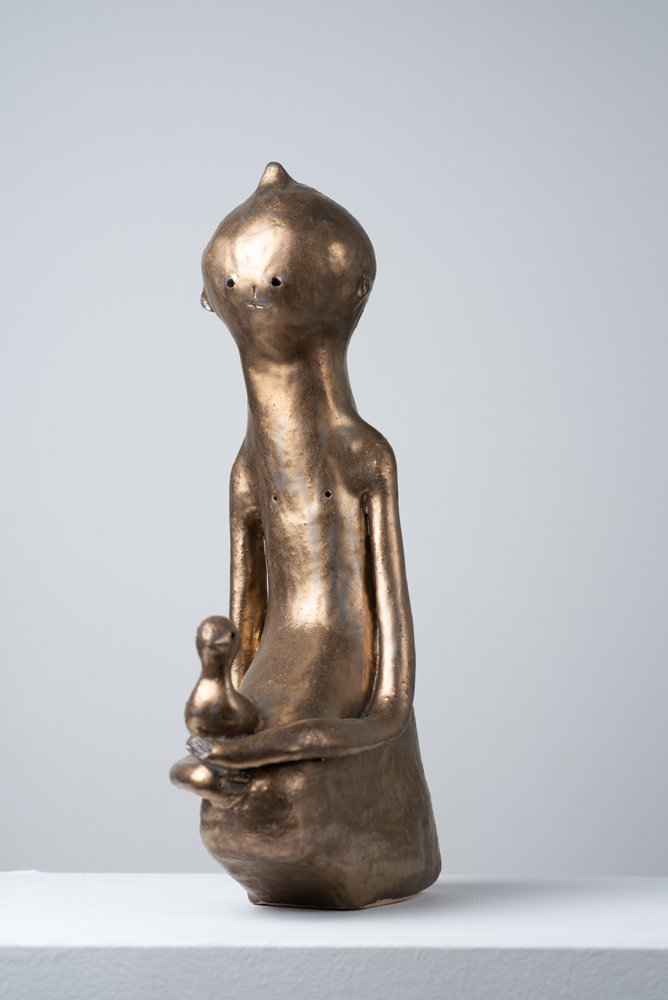
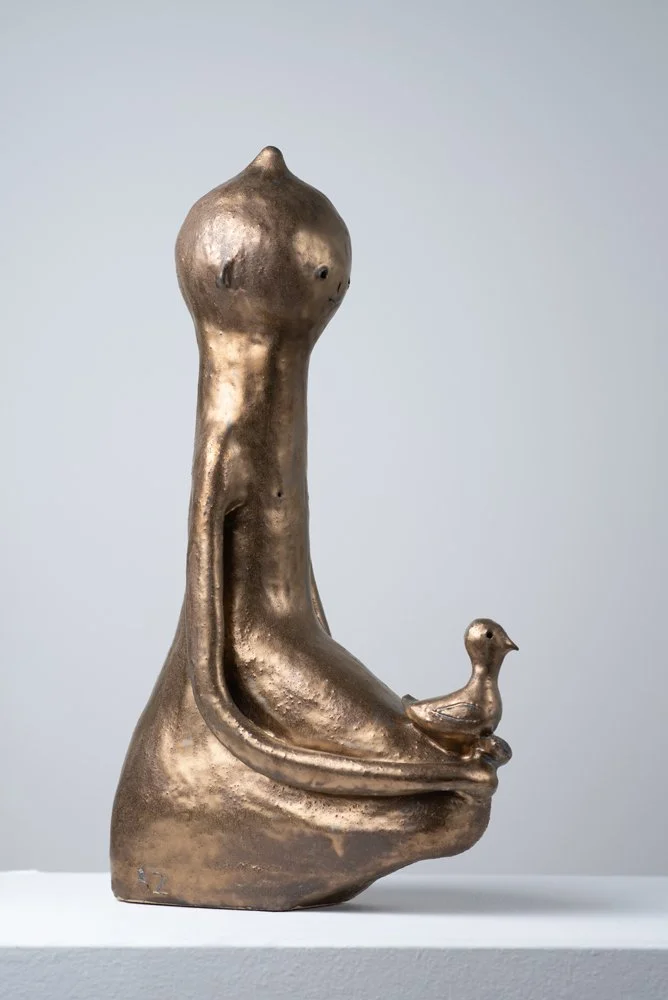
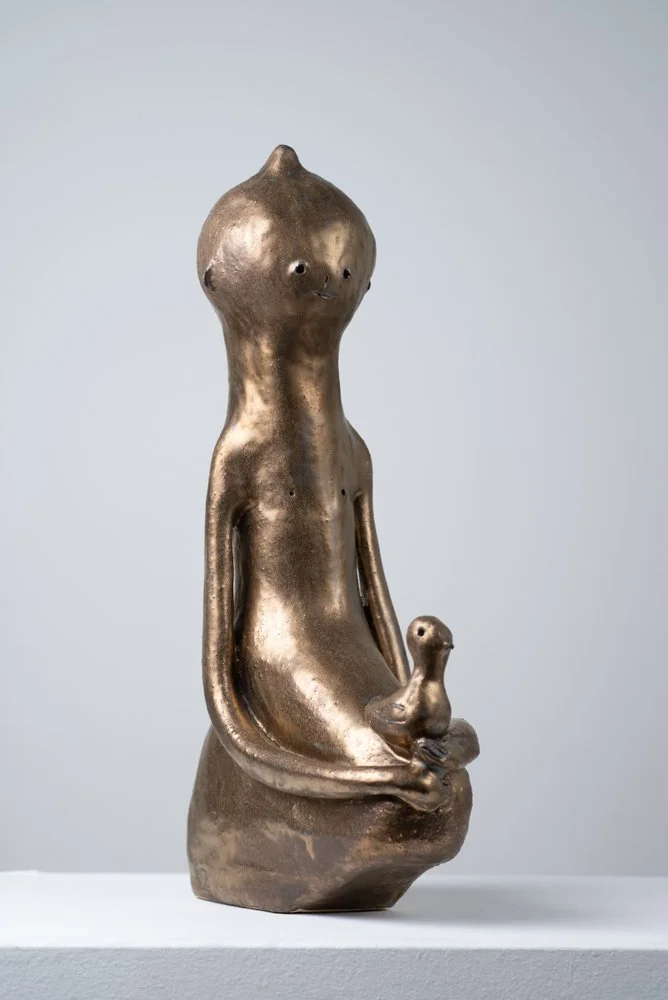
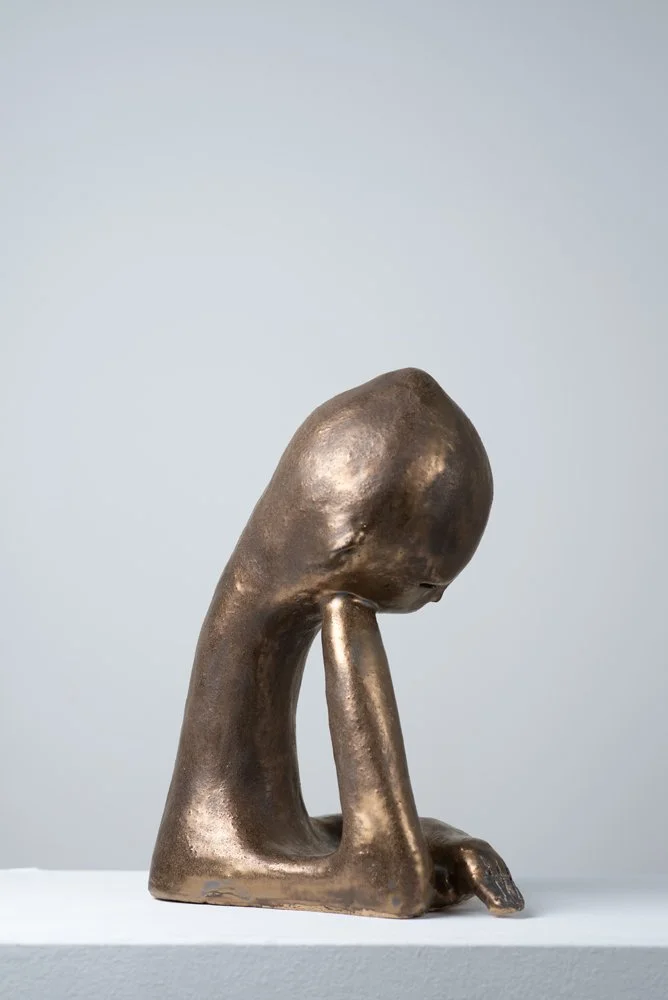
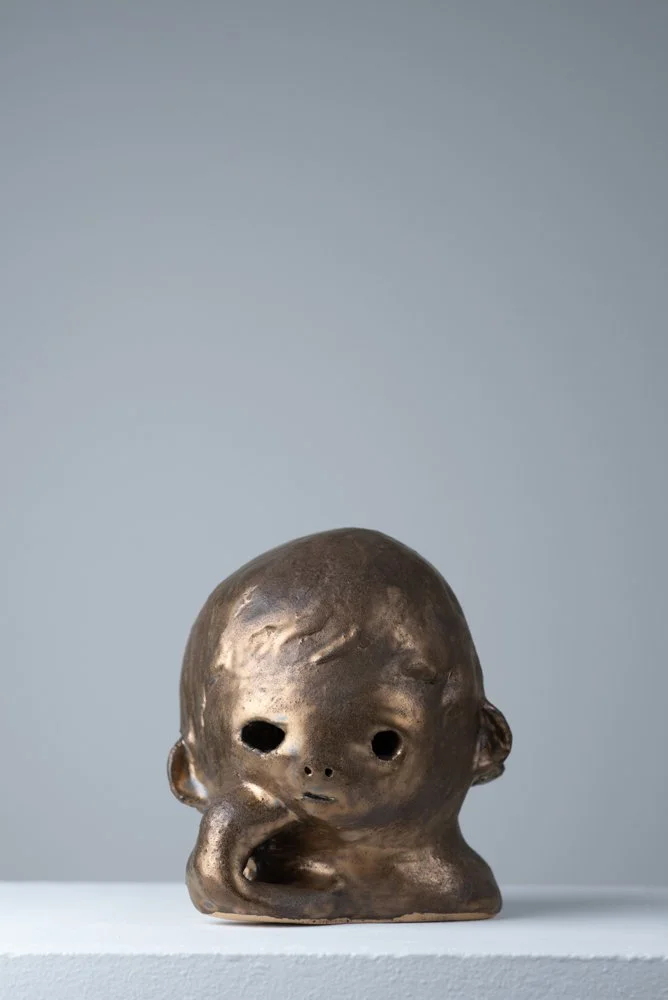
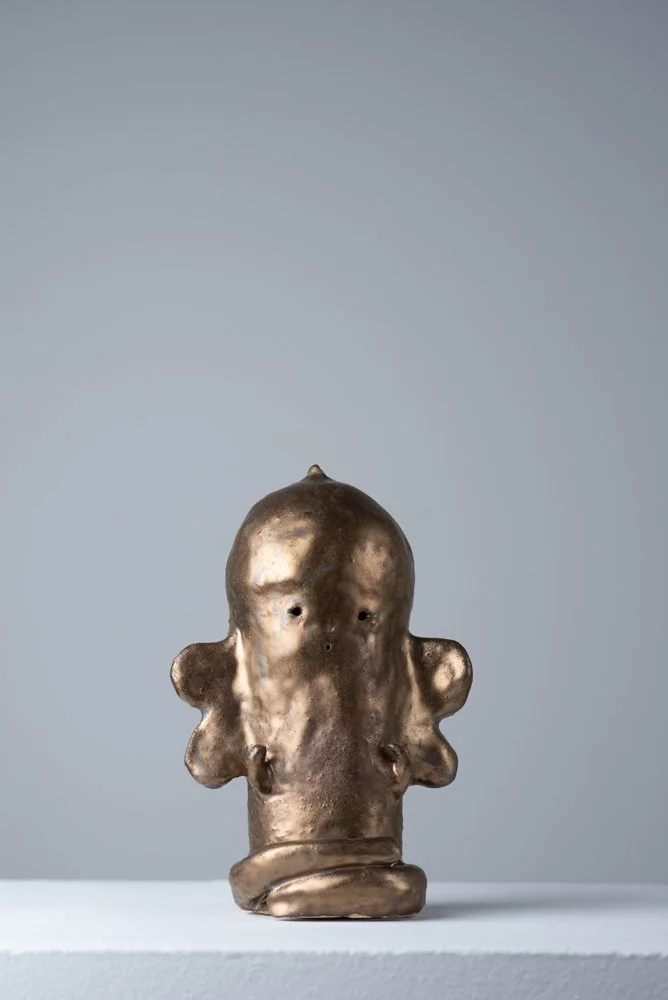
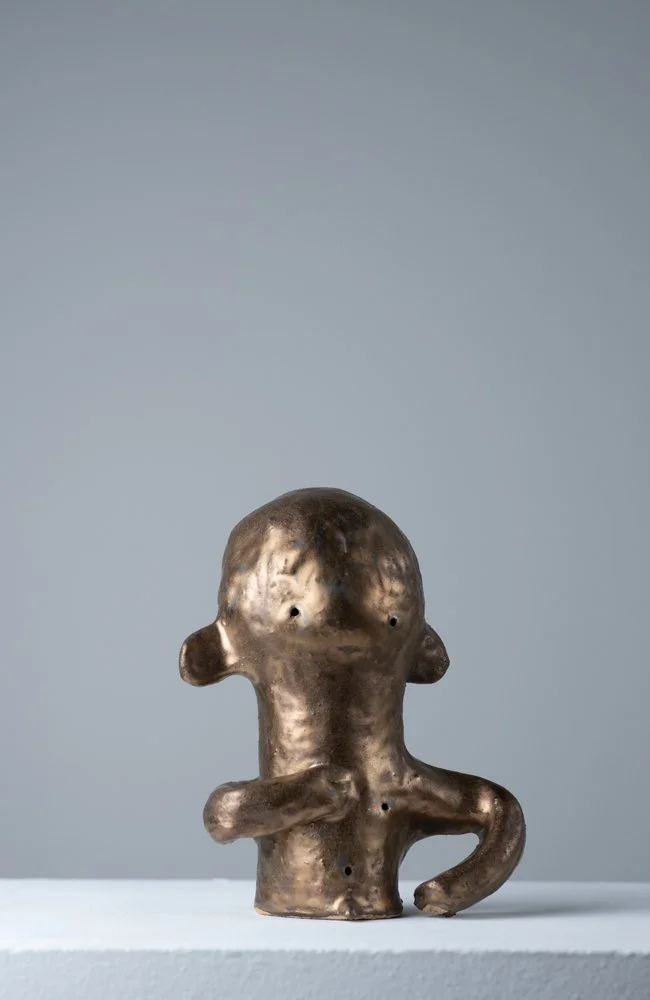
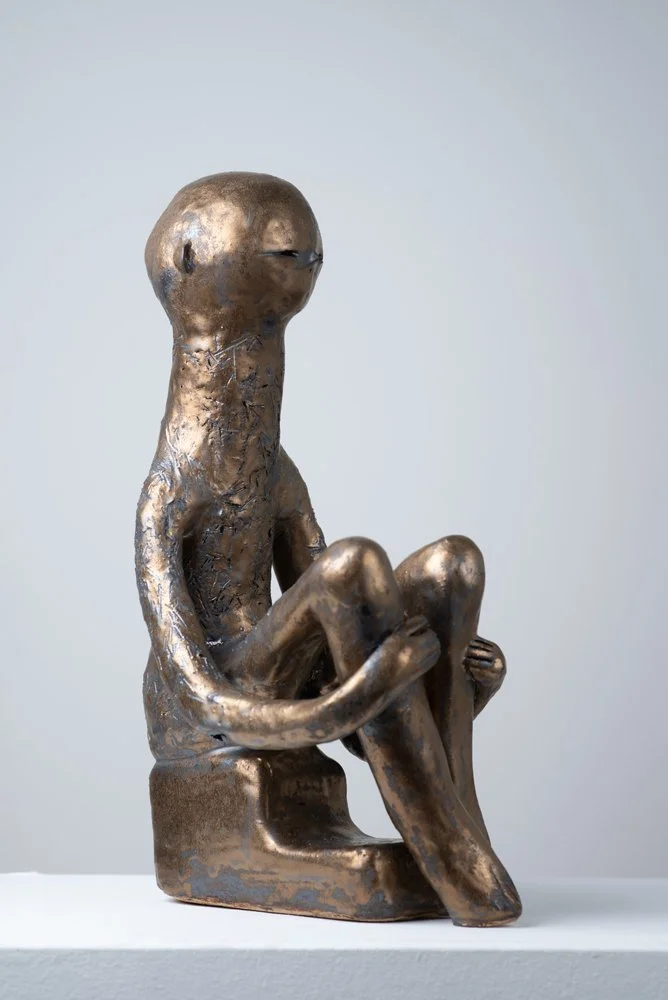
Bronze sculptures - ongoing
©Aleksandra Zawada
All photographs by Lorenzo Dalberto
This body of work was made between Feb- Aug 2025 with support of Creative Scotland Open Fund for Individuals.
All works were made by hand from start to finish by AZ, at the ESW metal casting workshop. I would like to thank Technicians : Stephen, Uist, Vicky, Gabi for supporting this work.
Q & A - Sep 2025
1. Why bronze?
It started in 2023. I saw a show in Paris. After, I was so curious how my work will look in bronze, I just had to do it. I had no casting experience at all, nor expectations. I made 2 casts: a sand cast and a ceramic mould. When I saw my first work in bronze, I saw something showing promise. It took me another year to gather enough funds to be able to come back to do casting. Before that, I looked at bronze in museums and widely speaking art world. Seeing another work in metal in the Peggy Guggenheim Collection in Venice is something I remember vividly. In 2022, I did a project studying surface on the bronze while working on a new body of work in ceramics. One thing leads to another.
2. What is your process?
All my work is taken from original work, modelled in clay. At this point, the work is a mixture of work selected for casting and the work made especially to cast from. As for now, I do not work with commercial foundry. I have worked with artists experienced in metal casting. We worked and learnt from each other. There were trials and errors. I made every single work myself.
When I started this project, the way I worked with bronze was as important as the work itself. It has been important for me that I work from a membership/open access point, and I do everything from start to finish. I wanted to be uncomfortable: without a studio or storage space. I worked in a form self-set up, nomadic “apprenticeship”. I worked 3-4 days a week in a workshop for 6 months, making moulds. The rest of the time, it was modelling new body of work. The setup had to be simple and easy to replicate if anyone else wanted to. I felt my biggest gift was the time to be able to work this way. It was not the most time-efficient way to produce, but an outcome was not my main aim. It was the most effective way to learn. I am very grateful to the founders (Creative Scotland Open Fund) for funding a project that concentrates on learning. These days, it is rare to focus on skills. I am lucky I live in a city that still has a metal foundry and the expertise to do this kind of work. I was surrounded by a great team.
3. How do you see your work in context working with such a historical material?
I like working with very simple means in a simple set up. I am aware it can feel contradictory if one thinks of working in bronze. My work so far is made from scrap bronze. It is far away from what one associates with bronze as an expensive material. Industrial recycled metal is quite humble. It is rubbish, really. It is time that is expensive. Hours put into learning something new are important and a grounding experience.
I like to work with and against material. Pushing limits of “needed”. What I mean is that I work against this preconception of hierarchy of materials and the idea of bronze being somewhere close to “art materials summit”. Doing this project has actually challenged this notion of “made in metal” as automatically being “ good” or “ serious “ work. I disagree that material makes work good. I think material and content should blend into something that works. I am dedicated to my art practice. But I try to avoid a “serious” way of work, meaning lacking risk or play. Serious can be very restrictive, at times suffocating. It is hard to play with material that requires so much planning, preparation, expense and time. I could only try. One has to have stamina to take this risk after months working on one mould. Then it all happens as if by magic during a few seconds of bronze being poured.
4. What is next?
I would love to show this body of work together, if anything is possible, I would love to show it in dialogue with a collection: old or new, but I also like surprising locations. For a while I have been thinking of the idea of commission, making a sculpture for a specific place or setting; my take on idea of “an atarpiece”. Working from smaller model to large public sculpture size work has also crossed my mind. But in general, I would love to just keep making. Every day making is a blessing. I cherish the time of play in the studio and I want to spend time exploring some ideas that emerged during the hours working on moulds for the pour.
patinated bronze
Size: H 38 x W 14 x D 23 cm
process: ludo mould
edition: AP
photograph by Lorenzo Dalberto
Work was made with support of Creative Scotland Open Fund for Individuals
patinated bronze
Size: H 25 x W 33 x D 14 cm
process: ceramic shell
edition: AP
photograph by Lorenzo Dalberto
Work was made with support of Creative Scotland Open Fund for Individuals
patinated bronze
Size: H 35 x W 30 x 23 D cm
process: sand mould
edition: Unique
photograph by Lorenzo Dalberto
Work was made with support of Creative Scotland Open Fund for Individuals
patinated bronze
Size: H 17.5 x W 19 x D 17cm
process: sand mould
edition: AP
photograph by Lorenzo Dalberto
Work was made with support of Creative Scotland Open Fund for Individuals
patinated bronze
Size: H 16 x W 11 × 8 D cm
Edition of 3, This is 2
process: ceramic shell
photograph by Lorenzo Dalberto
Made at the Casting Workshop of ESW
patinated bronze
Size: H 22.5 x W 8 × 6.5 D cm
process: sand mould
Unique
photograph by Lorenzo Dalberto
Made at the Casting Workshop of ESW